
FOOD & AGRICULTURE PRODUCT TESTING

Herbs, Spices & Condiments Testing

Analytical testing for herbs, spices and condiments covering physical quality, specific adulteration, contaminants, pesticide and fumigant residues, microbiological safety and product stability.

Request a Testing Quote Talk to an Expert
Herbs, spices and condiments testing
Testing Herbs, Spices & Condiments

Testing Herbs, Spices & Condiments Across Key Quality, Safety & Compliance Parameters

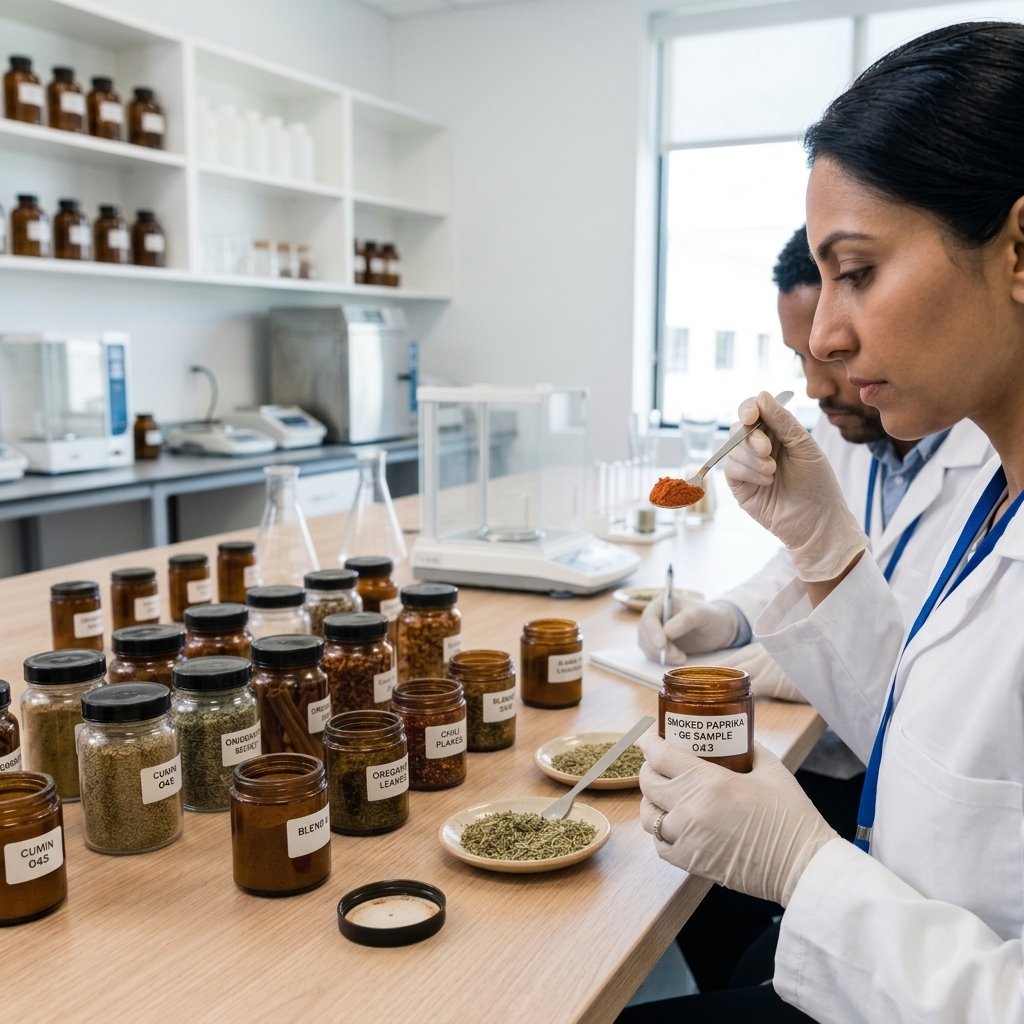
Herbs, spices and condiment products can vary significantly in botanical source, processing, formulation and intended market. DALPL provides analytical testing support for manufacturers, processors, ingredient suppliers, food brands and exporters to evaluate product quality, authenticity, safety and regulatory requirements. Testing can be tailored to the specific spice or product, its formulation and the applicable domestic or export requirements. The testing approach combines physical and compositional evaluation with targeted adulteration, contaminant, residue and microbiological testing.

Testing can be planned based on the product type, formulation, raw materials, regulatory requirements and intended market. Our laboratory capabilities support both routine quality control and specific analytical requirements during product development, validation and commercialization.

Testing can be tailored to individual spices, herbs, condiments, blended products and processed spice ingredients.

Testing can be tailored to the product, formulation and intended analytical requirement.

Herbs & Whole Spices

Examples include turmeric, pepper, cumin, cloves, cardamom, nutmeg, mace and garlic.

Ground, Blended & Processed Products

Examples include ground spices, seasoning and masala blends, amchur, dehydrated onion and other condiment products.

Key Testing Capabilities

DALPL can tailor testing panels to the product type, formulation, raw materials, regulatory requirements and intended market. The parameters below represent key areas of testing support and are not intended as an exhaustive list for every product.

Nutritional Labelling

Testing of applicable compositional and nutritional characteristics based on the product and its formulation.
Representative parameters
Applicable compositional parameters · Product-specific quality markers · Relevant nutritional parameters

Shelf Life Testing

Evaluation of product stability and quality over the intended storage period, based on the product, packaging and storage conditions. Shelf-life studies can be planned around the relevant quality, safety and stability indicators for the specific spice or condiment product.

Physical Quality & Purity

Evaluation of physical characteristics, purity and product-specific quality markers.
Representative parameters
Extraneous matter · Insects & moulds · Insect fragments · Added colouring matter · Moisture · Ash · Volatile oil · Crude fibre · Mineral oil

Specific Adulteration & Authenticity

Targeted testing to assess authenticity and identify product-specific adulteration or quality defects.
Representative parameters
Examples include: Curcuminoid colour value and lead chromate adulteration checks for turmeric · Piperine content and berry/corn characteristics for pepper · Headless, insect-damaged, khokar and tendril/mother-clove counts for cloves · Nutmeg-to-mace ratio and capsule-quality checks for relevant products · Other specific physical and compositional markers.

Pesticide Residues & Fumigant Residues

DALPL's reviewed scope includes a 235-analyte multi-residue pesticide panel covering insecticides, fungicides, herbicides and plant-growth regulators.
Representative parameters
ETO and ECH testing is also available for relevant spice and condiment products, supporting requirements where fumigant-residue limits apply.

Heavy Metals & Mycotoxins

Testing for relevant elemental contaminants and mycotoxins.
Representative parameters
Representative parameters: Arsenic · Cadmium · Copper · Iron · Lead · Mercury · Nickel · Tin · Antimony · Total Aflatoxin · Aflatoxin B1 · Aflatoxin B2 · Aflatoxin G1 · Aflatoxin G2

Additives & Chemical Quality

Testing of applicable additives and chemical characteristics based on product formulation and requirements.
Representative parameters
Representative parameters: Sulphite · BHA · BHT · TBHQ · Propyl Gallate

Microbiological Safety

Microbiological evaluation for relevant food-safety and quality indicators.
Representative parameters
Representative parameters: Aerobic/Total Plate Count · Coliform · Enterobacteriaceae · E. coli · Listeria monocytogenes · Salmonella · Staphylococcus aureus · Vibrio cholerae · Vibrio parahaemolyticus · Bacillus cereus · Clostridium perfringens · Yeast & Mould Product-specific examples include Salmonella and Yeast & Mould testing for dehydrated masala blends, dried mango powder (amchur) and dehydrated onion.

Sensory Evaluation

Evaluation of relevant sensory characteristics such as appearance, colour, odour, taste and other product-specific sensory attributes.
Representative parameters

Why Testing Matters

Product Quality

Verify physical and compositional quality across raw materials and finished products.

Authenticity & Adulteration

Identify specific adulteration and quality defects.

Food Safety

Evaluate microbiological, mycotoxin, heavy-metal and residue risks.

Export Readiness

Support pesticide, ETO/ECH and other destination-market requirements.

Product Stability

Assess shelf life and changes in product quality during storage.

Regulatory Compliance

Generate analytical data aligned with applicable Indian and international requirements.

Who We Support

Food manufacturers and brands
Spice processors and blenders
Ingredient suppliers
Seasoning and masala manufacturers
R&D / QA / QC teams
Importers and exporters
Private-label food businesses

How the Testing Process Works

01

Share Your Requirement

Tell us about the product, formulation, application and intended market.

02

Define the Testing Panel

DALPL identifies the relevant testing parameters based on the product and testing objective.

03

Submit Your Sample

Provide the required sample according to the agreed testing requirement.

04

Testing & Analysis

Samples are analysed using the applicable testing methods and procedures.

05

Results & Reporting

Receive the analytical results and applicable testing report.

Frequently Asked Questions

Q1. What herbs, spices and condiment products can be tested?
DALPL can support testing across whole and processed spices, herbs, ground spices, seasoning and masala blends, dehydrated ingredients and other relevant condiment products. The testing panel is tailored to the specific product.
Q2. How do I know which tests my spice product requires?
The appropriate panel depends on the commodity, formulation, processing, regulatory requirements, intended market and testing objective. DALPL can help identify the relevant parameters.
Q3. Can DALPL test for pesticide residues?
Yes. The reviewed DALPL scope includes a 235-analyte multi-residue pesticide panel for relevant spice and condiment products.
Q4. Can you test for ETO and ECH residues?
ETO and ECH testing is available for relevant spice and condiment products where fumigant-residue requirements apply.
Q5. Can you identify adulteration in individual spices?
Yes. DALPL's testing capability includes specific quality and adulteration checks, including examples such as lead chromate testing for turmeric and piperine/berry characteristics for pepper.
Q6. Can shelf-life testing be carried out for spices and condiments?
Yes. Shelf-life studies can be planned around the product, packaging, storage conditions and the quality or stability indicators relevant to the specific product.

Need a Testing Requirement Assessed?

Share your product and testing requirement with DALPL. Our team can help identify the relevant analytical parameters based on the product, formulation, regulatory requirement and intended market.

Request a Testing Quote Talk to a Testing Expert