
Hygiene Testing (Environmental Monitoring)
Contaminated surfaces, air and equipment are among the common and preventable sources of product contamination in pharmaceutical manufacturing and food processing. DALPL’s hygiene testing panel covers personnel hygiene, surface cleanliness and air quality across production environments.
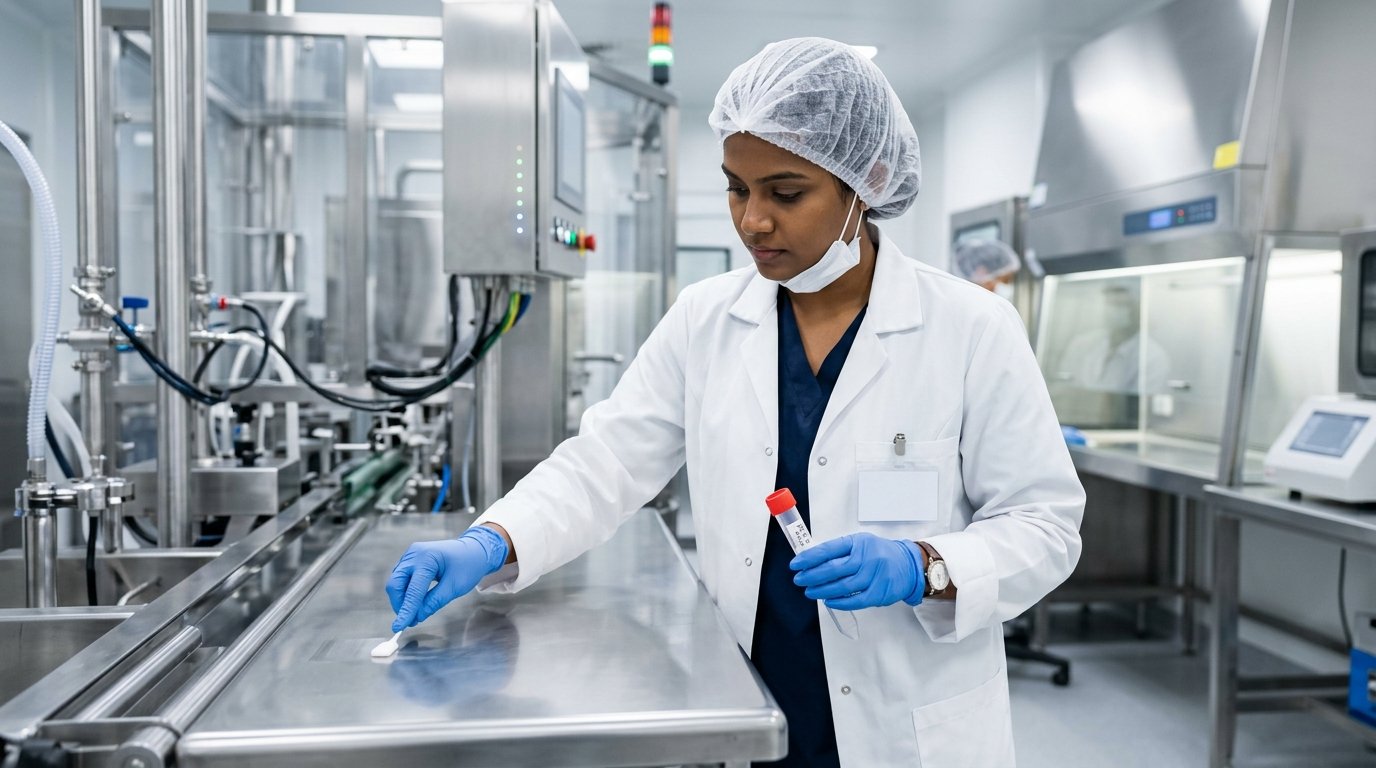
Why Hygiene Testing Matters
Maintaining hygiene in production environments helps identify potential sources of contamination and supports consistent manufacturing and food-processing practices.
Personnel Hygiene
Assess hygiene indicators and specified organisms through hand, apron and machine swab testing.
Surface Cleanliness
Test measured production and equipment surfaces for specified hygiene indicators and microorganisms.
Air Quality Monitoring
Use settle-plate and plate-exposure methods to monitor classified and non-classified production areas.
Our Hygiene Testing Services
Comprehensive sampling and analysis across the three primary vectors of environmental contamination.
Personnel Monitoring
Hand swabs, apron swabs and machine swabs.
- Shigella
- Staphylococcus aureus
- Total Aerobic Count
- Yeast and Mould Count
Air Monitoring
Settle-plate and plate-exposure testing in classified and non-classified areas.
- Total Aerobic Count
- Yeast and Mould Count
Surface Monitoring
Swab testing of measured production and equipment surfaces.
- Coliform
- Escherichia coli (E. coli)
- Listeria monocytogenes
- Pseudomonas aeruginosa
- Salmonella spp.
- Shigella
- Staphylococcus aureus
- Total Aerobic Count
- Yeast and Mould Count
Regulatory Framework & Context
Food Hygiene Requirements
FSSAI Schedule 4 — Good Manufacturing and Good Hygienic Practices (GMP/GHP) for food business operators
Hygiene testing can support a facility’s hygiene-control programme. Schedule 4 does not establish a specific swab-testing mandate; rather, testing is used proactively to help ensure effective hygiene practices.
Relevant Contextual Frameworks
Testing operations may intersect with the following frameworks across different industries:
- Revised Schedule M under the Drugs Rules, 1945
- EU GMP Annex 1 for manufacture of sterile medicinal products
- ISO 14644 cleanroom classification
Note: These are relevant contextual frameworks. DALPL does not certify blanket compliance or claim that every listed test is prescribed by each framework.
Hygiene Consulting Services
In addition to laboratory analysis, DALPL provides consulting support to assist with the implementation and review of hygiene programmes. Contact DALPL to discuss the hygiene-testing panel or related consulting support for your facility.
- Sampling programme design
- Trend analysis and alert/action level setting
- Cleaning process validation support
- Disinfectant rotation assessment
- Environmental control measure assessment
- Site visit assessments & Staff hygiene training
Why DALPL
NABL-Accredited Testing Facility
DALPL’s hygiene testing panel is NABL-accredited to ISO/IEC 17025:2017 standards for laboratory analysis.
Extensive Industry Experience
Over 20 years of testing experience across food and pharmaceutical manufacturing environments.
Frequently Asked Questions
Explore Related Testing Services
Discuss Your Hygiene Testing Requirements
Tell us about your production environment and testing needs. DALPL can help you identify the relevant hygiene-testing service or discuss associated consulting support.